Why My Brain Can’t Relax on Vacation (A Love Letter to Traveling with OCD)
A therapist’s honest experience traveling with health anxiety and OCD
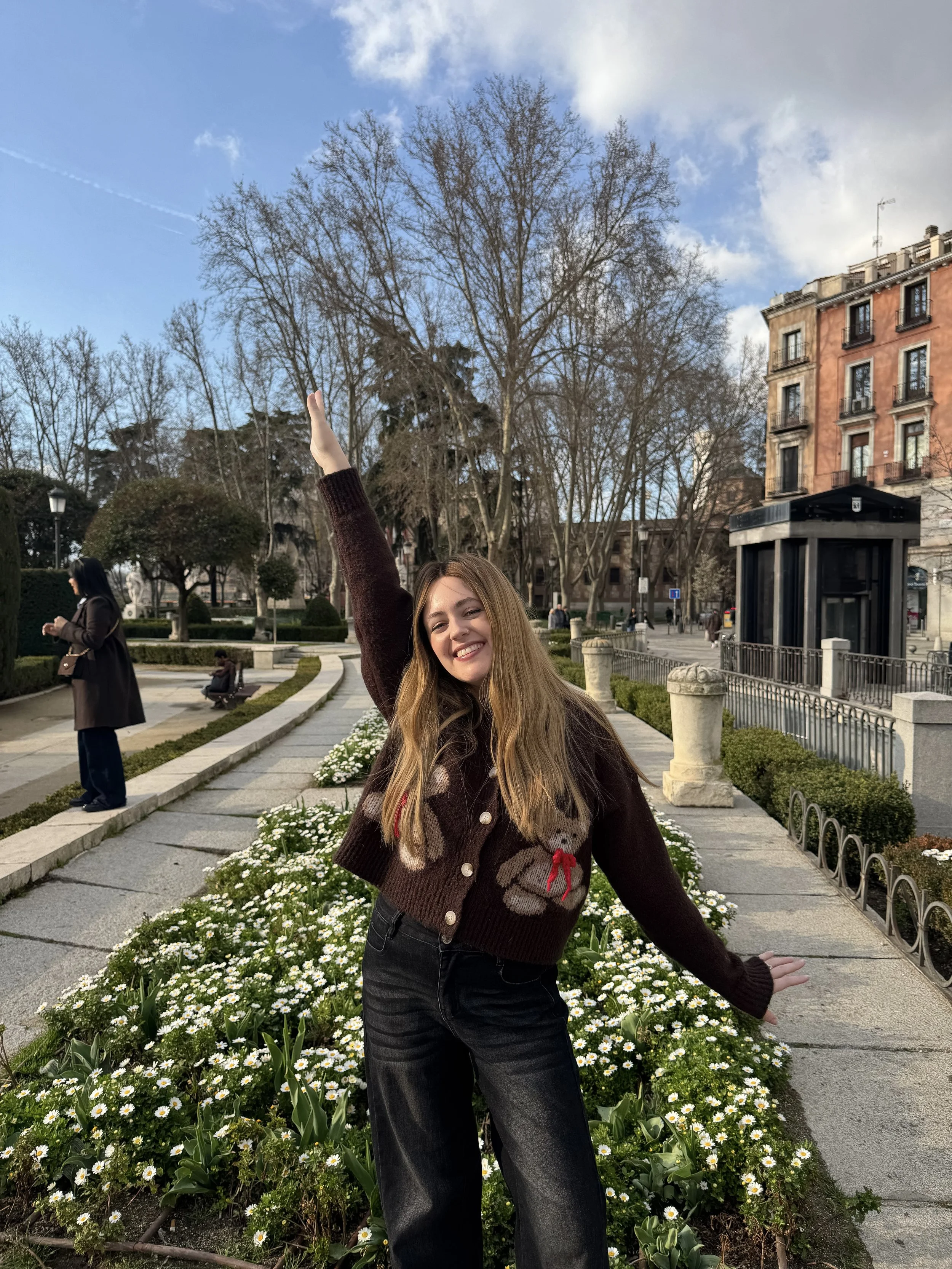
The Instagram Version vs. The Real Version
Yes, my photos look awesome. I am apparently effortlessly thriving abroad living that España life. So Europe, so chic!
While I am SO glad to be abroad, that does not mean that OCD stops when I travel - in fact it seems to get louder than usual. Literally while this photo was being taken, and right before, after, and basically constantly, the intrusive thoughts were yelling for my attention.
Did that chicken taste weird? Maybe I didn’t cook it enough.
Why does my stomach feel like that?
Is that a normal sensation in my throat?
Do they have urgent care here?
What is the Spanish version of the medication I take again?
Travel photos capture the aesthetic moment, but they rarely capture the internal monologue of someone with OCD and health anxiety trying to exist in a completely new environment. If you’ve ever traveled with anxiety, you probably know exactly what I’m talking about.
Why Anxiety/OCD Often Spike on Vacation
One of the biggest triggers for anxiety is uncertainty, and travel is basically a giant bundle of uncertainty. When you travel, a lot of the stabilizing structures of everyday life disappear:
Your normal routines
Familiar foods
Your regular doctor or pharmacy
Predictable schedules
A sense of environmental control
For an anxious brain, routine = safety. When routines disappear, the brain’s threat detection system ramps up. This part of the brain is constantly asking: Is something wrong? Do we need to prepare for danger?
When everything is unfamiliar, the brain can interpret novelty as potential risk - that’s why many people notice anxiety spikes when they travel, even when the trip itself is something they genuinely want.
For people with OCD, travel can also activate the cycle of intrusive thoughts, doubt, and reassurance seeking.
OCD works through a loop:
An intrusive thought or sensation appears
The brain interprets it as important or dangerous
Anxiety spikes
The person tries to neutralize the anxiety (researching symptoms, checking, asking for reassurance, scanning the body)
Health-related OCD often involves hyper-awareness of physical sensations. Traveling adds fuel to that cycle because everything feels slightly different. Your brain becomes the most intense security guard imaginable, constantly scanning for problems, meanwhile, everyone else seems to just be enjoying tapas.
What an “Aesthetic Moment” Actually Looks Like
From the outside, it might look like someone with anxiety is doing just fine. They’re walking through museums, taking pictures, laughing at dinner. Internally, the brain might be doing something more like this:
“Just checking… but what if we faint in this museum?”
“Do you think that headache means something?”
“Should we Google hospitals here?”
It’s a strange experience where you are both present and anxious at the same time. A lot of people assume the goal is to eliminate the anxiety before they can enjoy the trip, but, unfortunately, that approach tends to keep people stuck.
The Trap: Waiting Until You Feel Calm
Many people with anxiety or OCD unintentionally set a rule for themselves:
I’ll enjoy this once I feel calm.
The problem is that the brain rarely gives full certainty on command. The more you try to eliminate intrusive thoughts before living your life, the louder they often become.
This is because reassurance and avoidance actually reinforce the OCD cycle. They teach the brain that the thoughts are dangerous and need to be solved, so the brain keeps bringing them up.
The Shift: Letting Anxiety Ride Along
A core principle in evidence-based OCD treatment (like Exposure and Response Prevention, or ERP) is learning that you do not need to eliminate anxiety in order to live your life. Instead of waiting for intrusive thoughts to disappear, the goal becomes:
Continue doing what matters while anxiety is present.
For me, travel is a value. Experiencing new places, showing my daughter the world, trying new food, sitting in plazas and people-watching - those things matter to me!!
OCD can come along if it wants to. It just doesn’t get to decide whether the trip happens. Btw this is sooo much easier to write on a blog than to do but aren’t we all just works in progress? I like to think so :)
If You Relate to This
The work is learning that safety does not require certainty, and that a meaningful life is not built by waiting for a perfectly calm mind. Sometimes it looks like packing the suitcase, boarding the plane, and letting your anxious brain chatter in the background while you go live the life you actually want.
Gabrielle Eichler, RMHCI